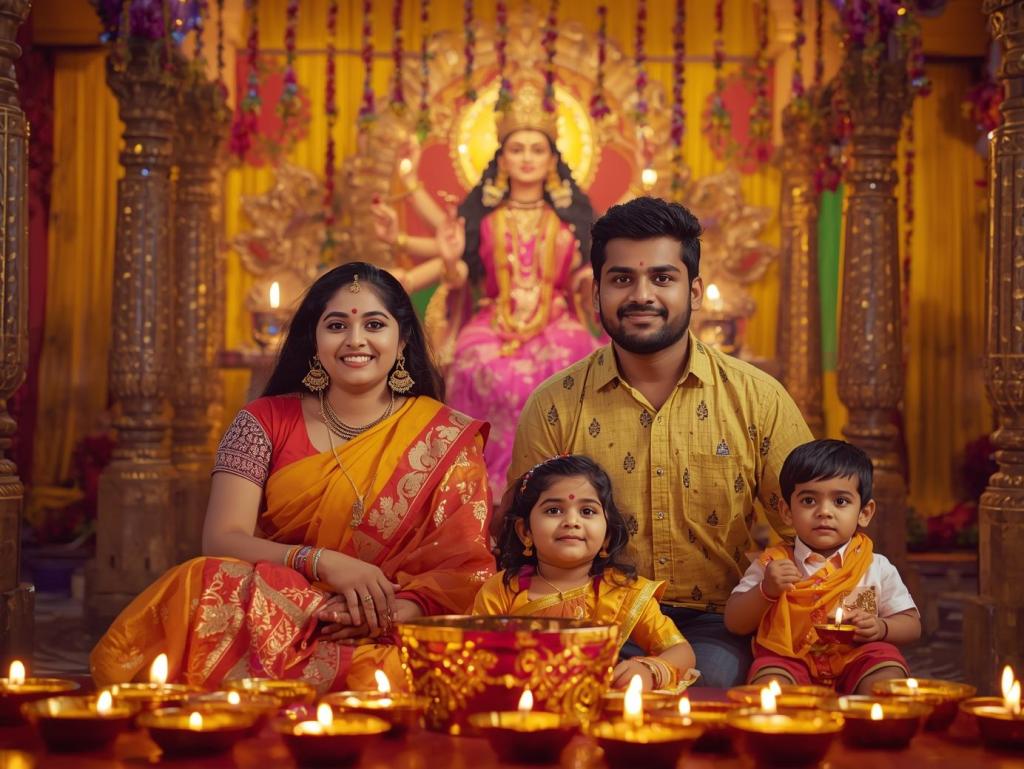
Every year, the festival season of Navaratri and Durga Puja tiptoes into our homes with the promise of nine days of devotion, fasting, and festivity—and if you have kids, a little bit of glitter, chaos, and snack negotiations thrown in for good measure.
This year, as I unpacked my box of puja decorations, my toddler announced, “Mummy, I’ll wear pink every day!” (If only Navaratri color charts agreed with toddler fashion dictatorships.) My baby son, of course, just wants to gnaw on the fake marigold garlands.
But here’s the thing: Navaratri or Druga Puja aren’t just about routines and rituals—they are about making space for joy, passing down traditions, and adapting them for little ones.
Whether you’re a Bengali maa like me missing the grand puja pandals of Kolkata, or a North Indian mom planning kanjak thalis, there’s beauty in weaving these threads together.
- Mahalaya
- The 9 Days of Navaratri
- Bengali Durga Puja Days
- Making Navaratri & Durga Puja Kid-Friendly
- Closing Thought
Mahalaya
The Whisper Before the Celebration
Before the beats of the dhaak and the swirl of marigolds, there is Mahalaya—that quiet, contemplative morning when we remember our ancestors and invite Maa Durga to descend from her heavenly abode.
For many of us, it’s an early morning ritual filled with the hauntingly beautiful recitation of the Chandi Path over the radio or in our minds.
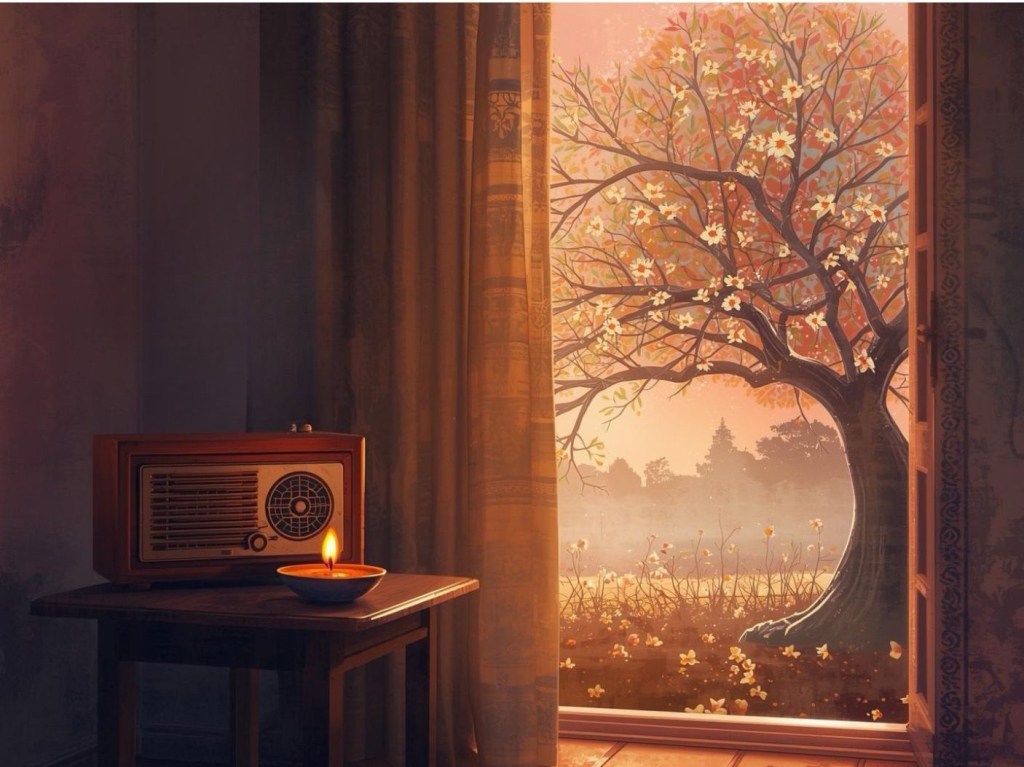
Even with little kids around, Mahalaya can be a gentle introduction to the season:
- Explain to toddlers that today is when Maa Durga “prepares to visit us,” almost like a storybook hero getting ready for an adventure.
- Light a single diya together and let your little one sprinkle a few petals, making it a calm, participatory moment.
- For older kids, share stories of how Mahalaya signals the start of a magical week ahead—nine days of devotion, color, and togetherness.
Mahalaya is subtle, reflective, and sometimes bittersweet.
For those of us away from home, it brings memories of Kolkata pandals, the aroma of fresh flowers, and the gentle hum of ancestors’ blessings.
Even with toddlers’ chatter and baby giggles filling the room, this first whisper of Durga Puja sets a sacred, joyful tone for the days to come.
The 9 Days of Navaratri
Colors, Goddesses & Dates (2025)
Navaratri is a feast of color, energy, and devotion.
If you love organizing outfits in advance—or just need help surviving toddler meltdowns over t-shirt choices—this chart is your best friend.
Each day has a dedicated color, associated goddess, and a story to share with little ones.

Mom hack: I print this chart and stick it on the fridge. My toddler loves ticking off each day after dressing up.
Sometimes, when she’s too sleepy to comply, I sneak in a matching hairclip or socks—close enough to keep the Goddess (and my little Goddess daughter) happy.
Bengali Durga Puja Days
Shashthi to Bijoya Dashami
For us Bengalis, Navaratri overlaps with Durga Puja—five days that feel like an entire season packed into one week.

Here’s how the days unfold:
- Shashthi (September 28): The unveiling of Maa Durga. In Kolkata, this is when the dhaak drums first thunder. For kids, it’s the start of “new clothes every day” and begging for balloons at every pandal stop.
- Saptami (September 29): The day starts with Nabapatrika snan—a ritual bath for nine sacred plants symbolizing the goddess. My toddler, of course, thinks it’s a “tree bath” and wants to splash along.
- Ashtami (September 30): The heart of Durga Puja. From chanting mantras to pushpanjali (offering flowers), Ashtami is deeply spiritual. In our local pujo, I let my daughter throw her petals with gusto—no neat handfuls, just showers of devotion.
- Sandhi Puja (Ashtami to Navami transition):
For me, this is the magical crescendo of the Puja. Sandhi Puja is performed exactly at the juncture between Ashtami and Navami—believed to be the moment Maa Durga vanquishes Mahishasura. In pandals, the dhaak beats intensify, lamps flicker, and incense smoke swirls around the idol.- Traditionally, 108 lotuses and 108 bel leaves are offered to Maa Durga, while 108 diyas are lit—symbolizing purity, devotion, and the triumph of light over darkness.
- The priests chant powerful mantras, and the rhythm of the drum feels like a heartbeat.
- For kids, it’s almost like watching a superhero battle come alive—ten hands of Durga, bright lights, and the thunder of dhaak making every little eye sparkle.
- My daughter always whispers, “Mummy, Maa is fighting the demon!”—and I nod, letting her imagination soar alongside devotion.
- Navami (October 1): The final fierce worship of Maa Durga before her departure. The puja pandals glow brightest, and food stalls are irresistible. I recreate this at home with a mini feast—bhog khichuri, labra, chutney, and sweets adapted for toddler taste buds.
- Bijoya Dashami (October 2): The farewell. In Bengal, married women smear each other with sindoor in sindoor khela. For kids, it’s narkel naru (coconut laddu) time and learning that endings can be beautiful too. My daughter waves at the idol on the screen and says, “Bye-bye, Durga Thamma, see you next year.” My heart melts every single time.
Making Navaratri & Durga Puja Kid-Friendly
Festivals can feel overwhelming with small kids, but a little creativity goes a long way in making Navaratri and Durga Puja both memorable and manageable.
Here are some detailed ideas:
1. Storytime Rituals
Children love stories, and Navaratri/Durga Puja is full of powerful tales. Make it magical by:
- Telling short bedtime stories of each form of Maa Durga corresponding to the day’s color.
- Turning Sandhi Puja into a “superhero moment,” describing how Maa Durga battles Mahishasura.
- Using puppets or dolls to act out scenes—the ten hands of Durga can be “doll hands” with craft sticks attached for effect.
2. Color-Play Dressing
Kids love bright colors—and dressing up becomes a fun game instead of a morning struggle:
- Let them “hunt” for the day’s color in their wardrobe.
- If they resist, sneak in accessories like hairclips, bangles, or socks in the matching hue.
- Make it a mini photo ritual: snap a daily picture and create a “Navaratri color journal” to look back on.
3. Craft & Activity Corners
Hands-on crafts keep toddlers and preschoolers happily busy:
- Paper lotuses & diyas: They can color or decorate them with glitter and stickers.
- DIY dandiya sticks: Even wooden spoons can be painted or wrapped with ribbon for safe indoor garba sessions.
- Maa Durga coloring sheets: Printings of Durga in her ten hands allow older kids to learn about the different weapons and symbols.
- Leaf stamping: Using leaves or bel leaves dipped in safe paint for fun patterns connects kids with the natural elements of the puja.
4. Mini Aarti Helpers
Even small children love to feel included in rituals:
- Give toddlers a small bell, flower petals, or an electric diya to hold safely.
- Let them sprinkle petals during pushpanjali. Emphasize participation over perfection—showered petals count as devotion!
- For older kids, teach the names of the nine forms of Durga during aarti or bhog offerings.
5. Toddler-Friendly Bhog Plates
Festival food is tempting, but little tummies need special care:
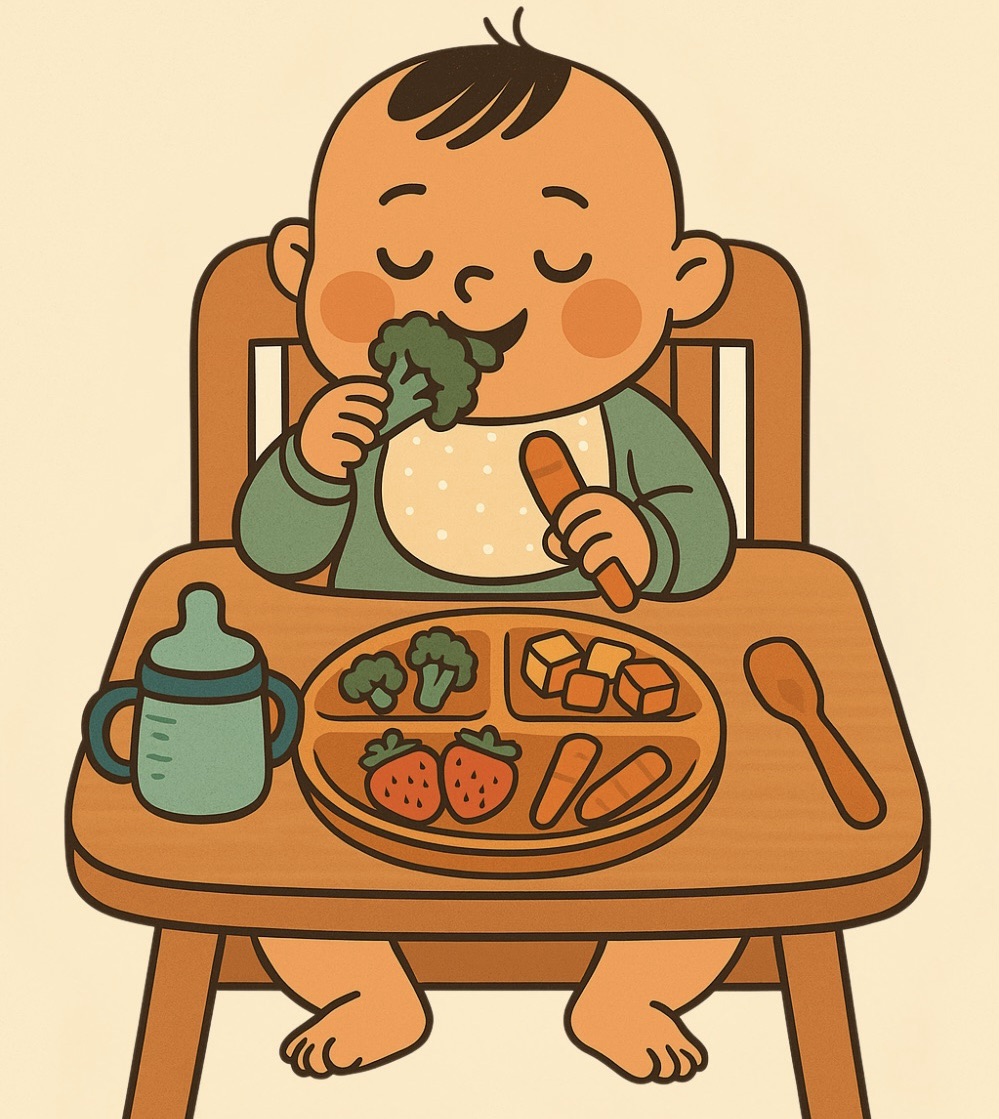
- Prepare mini bhog plates: bite-sized pooris, mashed chana, soft halwa with less ghee, or small cups of khichdi.
- Let kids “help” by arranging a few flowers or sprinkling a pinch of rice—simple participation builds excitement.
- Introduce new tastes gradually, combining traditional bhog with toddler-friendly versions.
6. Dance & Music Fun
Kids naturally respond to rhythm, so Navaratri and Durga Puja are perfect for music and movement:
- Play garba or dhaak beats in the living room. Toddlers can clap, stomp, or wave dupattas.
- Older kids can try basic dandiya steps with DIY sticks.
- Babies can join as “backup dancers”—crawl, spin, or shake rattles.
7. Learning Through Play
Use the festival to teach subtle life lessons:
- Count the 108 diyas, lotuses, or bel leaves with older kids—they learn numbers in a fun way.
- Talk about the symbolic meaning of each color and goddess, keeping it simple: courage, wisdom, love.
- Introduce gratitude rituals: each child can name one thing they’re thankful for before the aarti or bhog.
8. Festival Journals for Kids
Create a small Navaratri or Durga Puja journal for kids:
- Include a color chart they can tick off each day.
- Add spaces for doodles, mini stories, or stickers from each day’s craft.
- Include a “favorite moment” section—children can note what they loved most about the puja, whether it was the Sandhi Puja lights or tasting halwa.
Closing Thought
Navaratri and Durga Puja with kids aren’t picture-perfect.
It’s noisy, snack-filled, and sometimes, we skip the evening aarti because bedtime was a battle.
But it’s also beautiful—because we’re showing our children that these traditions are not rigid—they’re living, breathing, and growing with us.
So this Navaratri and Pujo, whether you’re in a pandal or your living room, whether you’re cooking bhog or ordering pizza, may Maa Durga bless your little ones with strength, kindness, and joy.
And may you find your own rhythm in the nine colors, five sacred days, and the magical Sandhi Puja moment of devotion.
Shubho Navaratri and Shubho Pujo from my home to yours.
– Pallavi @ The Good Juju








Leave a comment