
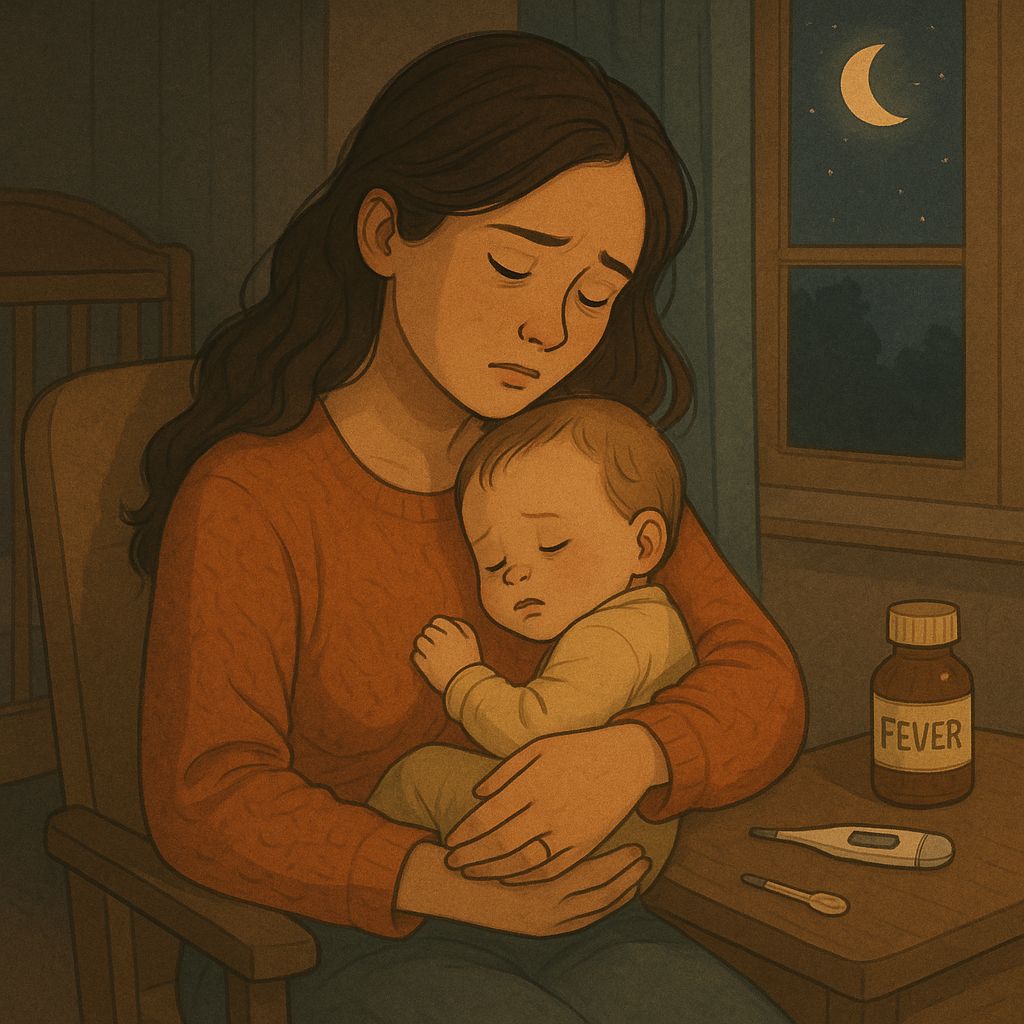
(with free printable fever-survival checklist, subscribe for more!)
It all started at 2:13 AM.
My baby was burning up. He was clingy all day, a little off, but nothing too worrying.
And then came the night—like most baby fevers do—creeping up silently while the rest of the world slept.
His forehead was warm. His body was hot.
I held him, heart pounding, and whispered to myself,
“It’s just a fever, right?”
But then the thoughts spiraled.
What if it’s an infection?
What if it spikes more?
What if it’s something serious?
And so I did what every modern mom does when panic hits:
I Googled.
Infants. Fever. Causes.
What temperature is too high?
What medicine?
Emergency?
Dangerous?
And somewhere between reading that 100.4°F is the threshold and falling down the rabbit hole of brain damage myths, I realized—I need to write this down.
Not just for me, but for any parent out there, awake at night, googling in panic.
So here’s your fever handbook—part science, part story, and all heart.
A Note Before We Begin
Disclaimer:
I’m not a doctor.
I’m just a sleep-deprived mother who panicked, researched, and then wrote her way to sanity.
Everything here is based on personal experience, conversations with doctors, and reliable sources.
Always consult your pediatrician for anything medical.
What Is a Fever, Really?
Fever isn’t an illness.
It’s a symptom—a sign that your baby’s body is fighting something off.
According to both the Indian Academy of Pediatrics (IAP) and American Academy of Pediatrics (AAP), a rectal temperature of 100.4°F (38°C) or above is considered a fever in babies.
Your baby’s immune system, still fresh and figuring itself out, raises the body’s thermostat when:
- A viral infection or
- Bacterial infection
- Teething (though usually mild)
- Vaccinations
- Heat or
- Dehydration
The heat makes it harder for the invaders to thrive.
Why do fevers get worse at night?
Because of the body’s circadian rhythm—temperature tends to rise in the evening due to lower cortisol levels and increased immune activity at night.
[Source: AIIMS Delhi – Department of Pediatrics]
When to Stay Calm (Harder Than It Sounds)
Let’s face it: staying calm is not the default when our babies feel like hot water bottles. But here’s when you can hold steady:
- If baby is older than 3 months, and:
- Fever is below 102°F (38.9°C)
- Baby is alert, feeding, passing urine, and not dehydrated
- Fever lasts under 72 hours
- Baby is cranky but responsive (yes, even crying is a good sign!)
- Post-vaccine fever
- Totally normal.
- Monitor and comfort.
- Teething fever
- Usually mild and goes away in a day.
- Nighttime spikes
- Very common!
- Fevers often rise in the evening and break by morning.
When to Go Full Mama Bear and Call the Doctor
You know your baby best.
But the Indian Academy of Pediatrics and doctors from Apollo Hospitals recommend seeking medical help when:
- Baby under 3 months has a rectal temp over 100.4°F (38°C)
- Fever exceeds 104°F (40°C)
- Baby is unusually drowsy, limp, or non-responsive
- Refuses feeds for more than 8 hours
- Fewer than 3 wet nappies in 24 hours
- Has persistent vomiting, rash, seizure, or labored breathing
- Fever lasts more than 3 days
In these cases, trust your instincts and get help—even in the middle of the night.
Fever Toolkit:
From Paracetamol to Potli
Every desi parent has their go-to “nuskha” for fever. Here’s a mix of conventional and traditional remedies:
1. Allopathy (the Modern Medicine)
- Paracetamol (Calpol, Crocin) and Ibuprofen (Ibugesic Plus) are widely used in India.
- Dosing must be weight-based. Always consult your pediatrician first.
- Don’t mix both unless a doctor advises.
- Avoid aspirin due to risk of Reye’s syndrome.
Tip from our doc: Don’t give ibuprofen on an empty stomach.
Pro tip: Always use a baby-specific syringe or dropper. Kitchen spoons are a no-go.
2. Homeopathy
Some popular remedies include:
- Aconite for sudden onset fever
- Belladonna for high fever with flushed face
- Ferrum Phos for slow-rising fever
- Many Indian parents use SBL or Dr. Reckeweg drops—but do so only after speaking to a qualified homeopath.
The scientific jury is still out, but if it works for you and your baby, and your doctor’s okay with it—it’s your choice.
[Source: Central Council for Research in Homoeopathy, Ministry of AYUSH]
3. Herbal & Traditional Remedies
- Ajwain potli – dry roast carom seeds in a muslin cloth and dab on baby’s chest and soles. It’s believed to ease congestion and fever.
- Kadha (for older kids & moms) – tulsi, ginger, black pepper, and honey boiled in water.
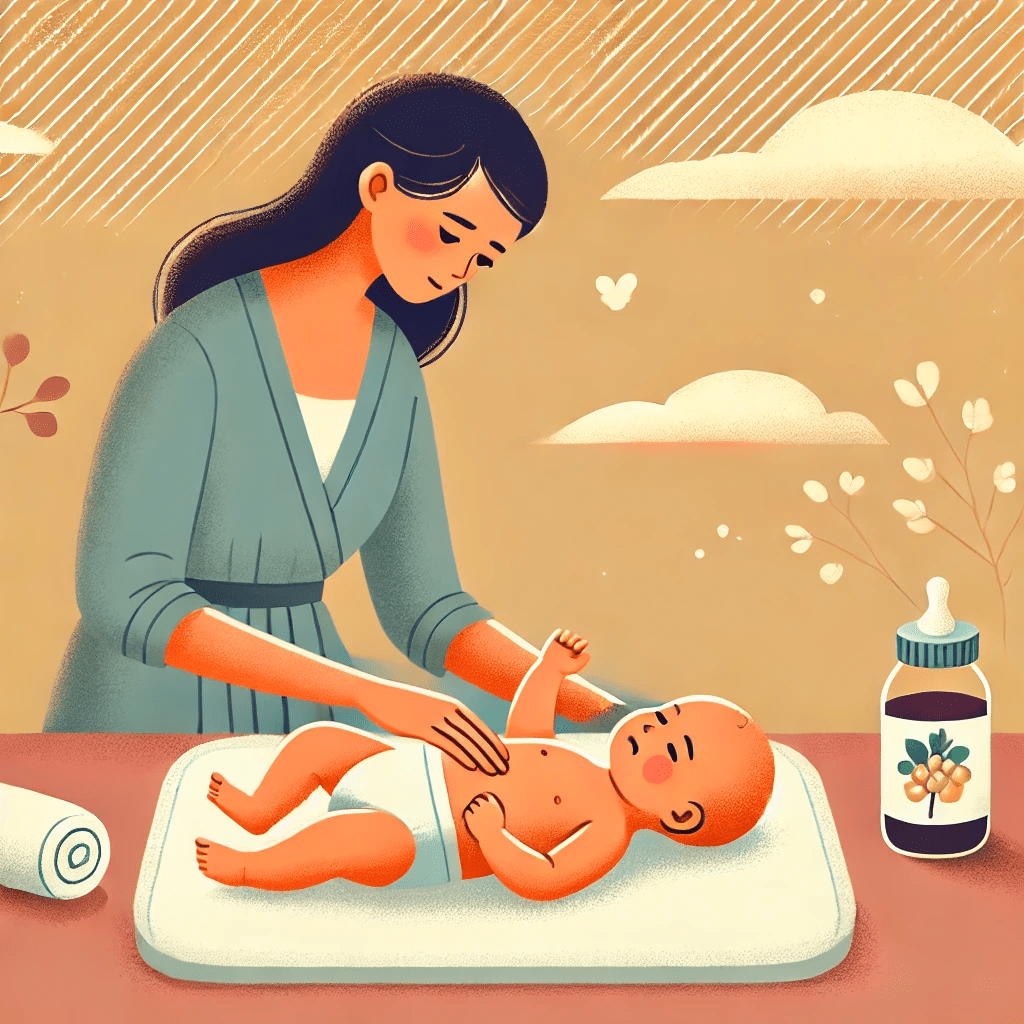
- Mustard oil massage with garlic – done cautiously to warm the body (never if fever is too high).
Note: Never give honey to babies under 1 year. Avoid herbal decoctions for babies unless approved by your pediatrician.
[Source: AYUSH guidelines for child care]
The Checklist I Wish I Had at 2 AM
I made this for you, dear mom reading this in a fever haze. Print it, stick it to your fridge, or toss it into your diaper bag. Because fevers wait for no one, and panic loves late nights.
10-Step Baby Fever Survival Checklist for Indian Moms
- Take the Temperature – 100.4°F (38°C) is a fever.
- Don’t Panic – Watch baby’s behavior, not just numbers.
- Offer Frequent Feeds – Keep baby hydrated with milk.
- Give Paracetamol – Calpol/Crocin if doctor-approved.
- Avoid Overdressing – Use light cotton clothes only.
- Try Lukewarm Sponge Bath – Never use cold water.
- Check for Red Flags – Rash, seizures, no pee, lethargy.
- Use Traditional Remedies with Caution – No honey <1 year.
- Trust Your Mom Instinct – Always.
- Print & Keep This Handy – Diaper bag or fridge!
Download the printable checklist here
Fever Myths That Need to Go
- Myth: A teething baby always has a fever.
- Truth: Teething might raise temperature slightly but rarely causes full-blown fever. If it’s above 100.4°F, look for another cause.
- Myth: Giving a bath during fever is harmful.
- Truth: A lukewarm sponge bath can help bring down temperature. Just don’t use cold water or ice.
- Myth: You must bring down every fever.
- Truth: Mild fevers are the body’s natural defense. Treat the discomfort, not just the number.
What Helped Me Most
That night, once the panic softened, I remembered what my pediatrician always says:
“Watch the baby, not the thermometer.”
So I watched.
He was warm. He was clingy.
But he was still nursing. Still making eye contact. Still reaching out for me.
And I knew I didn’t need to sprint to the ER.
I just needed to hydrate him, cuddle him, and keep an eye on the red flags.
I wrote this post in the calm that followed the fever storm—because if even one mama reads this at 2 AM and breathes easier, that’s my version of good juju.
From one mama to another:
You’ve got this.
Fever will pass.
Love is the best medicine. ❤️
With warmth (and a thermometer within reach),
The Good Juju
Sources & References:
- Indian Academy of Pediatrics
- AIIMS Delhi – Department of Pediatrics
- Apollo Hospitals – Child Health Guide
- American Academy of Pediatrics
- American Academy of Pediatrics – Parenting website
- Seattle Children’s Hospital – Fever Guidelines
- Central Council for Research in Homoeopathy – Ministry of AYUSH
- NCCIH (National Center for Complementary and Integrative Health)








Leave a comment