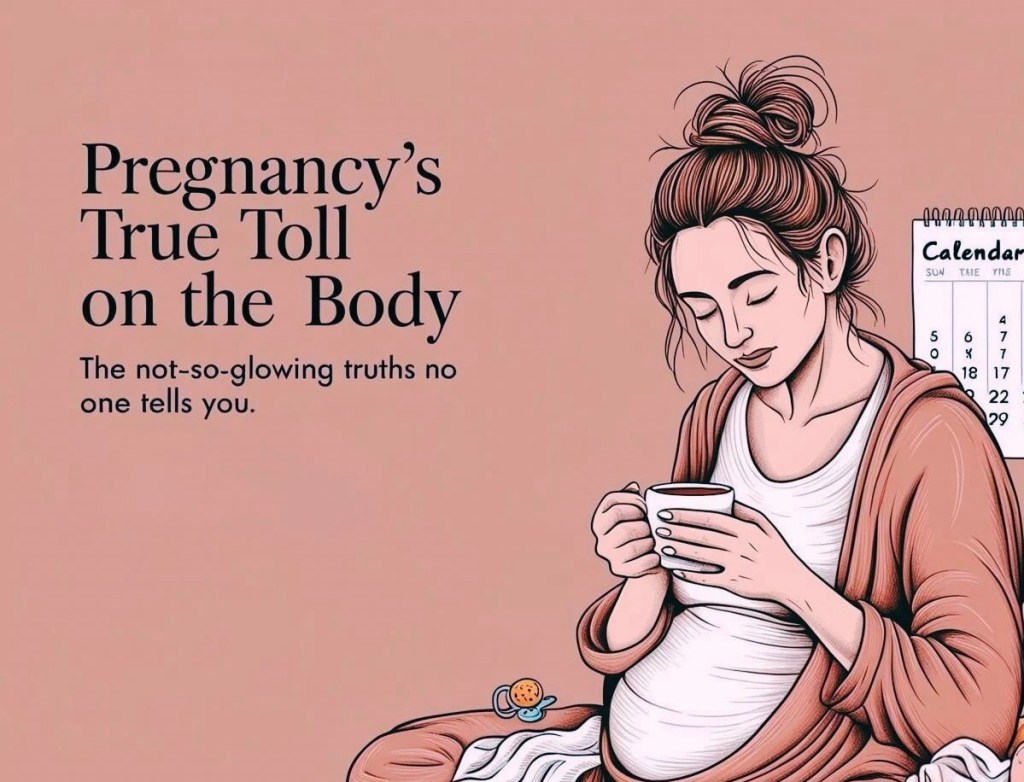
The Not-So-Glowing Truth We Need to Talk About
by The Good Juju
Ah, pregnancy. That mystical time when everyone wants to rub your belly, your emotions run on loop like a daily soap, and your body is moonlighting as a full-time construction site for a brand new human.
Magical? Sure.
But also? Completely, utterly devastating on the body.
We glamorize the bump and the baby showers, but what about the behind-the-scenes breakdown?
Because make no mistake—pregnancy is a total body experience, and spoiler alert: it doesn’t end at childbirth.
In fact, that’s just the intermission.
The Research Is In: Pregnancy Changes You Forever
A massive new study published in Nature (March 2024) confirmed what moms have been saying since the dawn of diapers:
Pregnancy leaves a lasting impact on your health.
Researchers analyzed data from millions of pregnancies and found that the risks don’t stop at delivery.
We’re talking increased chances of heart disease, Type 2 diabetes, and long-term pelvic floor disorders.
Conditions like gestational diabetes and preeclampsia? They don’t just vanish—they stick around, leaving long-term footprints on your health.
My Tale of Two C-Sections
(And One Broken Toe)
I’ve done this rodeo twice. Two babies, two cesareans—but wildly different recoveries.
With my first, I bounced back with a decent dose of determination (and an unhealthy amount of tea). I waddled, winced, but managed.
Then came baby number two. And friends, my body said, “You tried it.”
The exhaustion hit harder. My recovery dragged on. Now, at over nine months postpartum, I’m still limping (literally and figuratively) toward anything that remotely feels like “pre-pregnancy normal.”
My core? A floppy pancake.
My joints? They snap, crackle, and pop louder than breakfast cereal.
And the cherry on top? I broke my toe two weeks postpartum.
No, not from tripping over a toy or heroically saving a baby from falling. I lightly bumped it on the foot of the bed while trying to climb in—and snap. Bone, broken clean in two.
Why? Because my calcium levels had plummeted so low from pregnancy and breastfeeding that I was basically held together by willpower and iron supplements.
Fact Check:
Pregnancy and lactation draw heavily on calcium stores, especially in the third trimester and while breastfeeding. Bone mineral density can drop by up to 10% in nursing moms.
Source: NIAMS – Pregnancy, Breastfeeding and Bone Health
Source: American College of Obstetricians and Gynecologists
What Pregnancy Actually Does to Your Body
Let’s break it down by system—because no organ escapes unscathed:
- Cardiovascular System:
- Your blood volume increases by 50% during pregnancy, stressing the heart.
- If you had preeclampsia or hypertension, you’re at increased risk for future heart problems.
- Source: American Heart Association
- Source: Mayo Clinic
- Bones and Joints:
- Relaxin loosens joints (thanks, evolution), which, paired with nutrient depletion, makes you prone to injury and chronic pain.
- Pelvic Floor and Core: Pregnancy and delivery weaken these muscles, making sneezing a dangerous game of bladder roulette.
- Source: Pelvic Health & Rehab Center
- Digestive System:
- Hormonal changes slow digestion, leading to constipation and hemorrhoids.
- Source: Health.com
Breastfeeding: Nourishing and Draining (In Every Way)
Yes, it helps your uterus shrink and protects against certain cancers.
But breastfeeding also demands 500 extra calories per day—and drains you dry of nutrients like calcium, iron, and vitamin D.
Add mood swings, sleep deprivation, and hormonal chaos, and you’ve got the perfect recipe for burnout.
What Helps (A Little)
If you’re more “hunched zombie” than “bouncing mama,” try this:
- Pelvic Floor Therapy:
- Essential for rebuilding core strength and bladder control.
- Source: Cleveland Clinic
- Cardiac Monitoring:
- Especially if you had high BP or gestational diabetes.
- Source: Heart.org – Postpartum Heart Health
- Nourishment & Supplements:
- Think leafy greens, calcium-rich foods, fatty acids, and a good postnatal vitamin.
- Source: Mayo Clinic – Postpartum Care
- Indian diet for a Breastfeeding mother – Thegoodjuju.blog
- Indian Postpartum Recovery – thegoodjuju.blog
- Rest (Somehow):
- Your healing needs it.
- Lower the bar and let people help.
- Mental Health Support:
- Whether it’s a therapist, a friend, or a support group—talk.
- Source: Postpartum Support International
- Dealing with Postpartum Depression – thegoodjuju.blog
- Gentle Movement & Hormonal Balance:
- Light walks, yoga, or stretching paired with protein-rich meals can help stabilize your body again.
- Source: Endocrine Society
Disclaimer:
Everything you’ve read here is straight from my own postpartum trenches—based on personal experience and a lot of late-night Googling (and cross-checking with actual research, promise).
But I’m not a doctor—just a mom figuring things out.
So if you’re dealing with any health concerns, please check in with a medical professional who knows your story.
Your body deserves real care.
Final Juju
Postpartum doesn’t come with a countdown clock.
For some of us, the fog lifts at 6 weeks.
For others (hi, it’s me), we’re still crawling back to ourselves nine months later.
So if your jeans don’t fit, your joints hurt, or you’re googling “is brain fog permanent”—you’re not broken. You’re healing from something monumental.
Give your body grace.
Give yourself time.
And please, don’t try to climb into bed without a calcium supplement.
Let’s keep this conversation going. Drop your postpartum story in the comments—and if you found this helpful, hit that subscribe button! I’ve got more no-fluff motherhood content coming your way, and trust me, you won’t want to miss the real talk.







Leave a comment