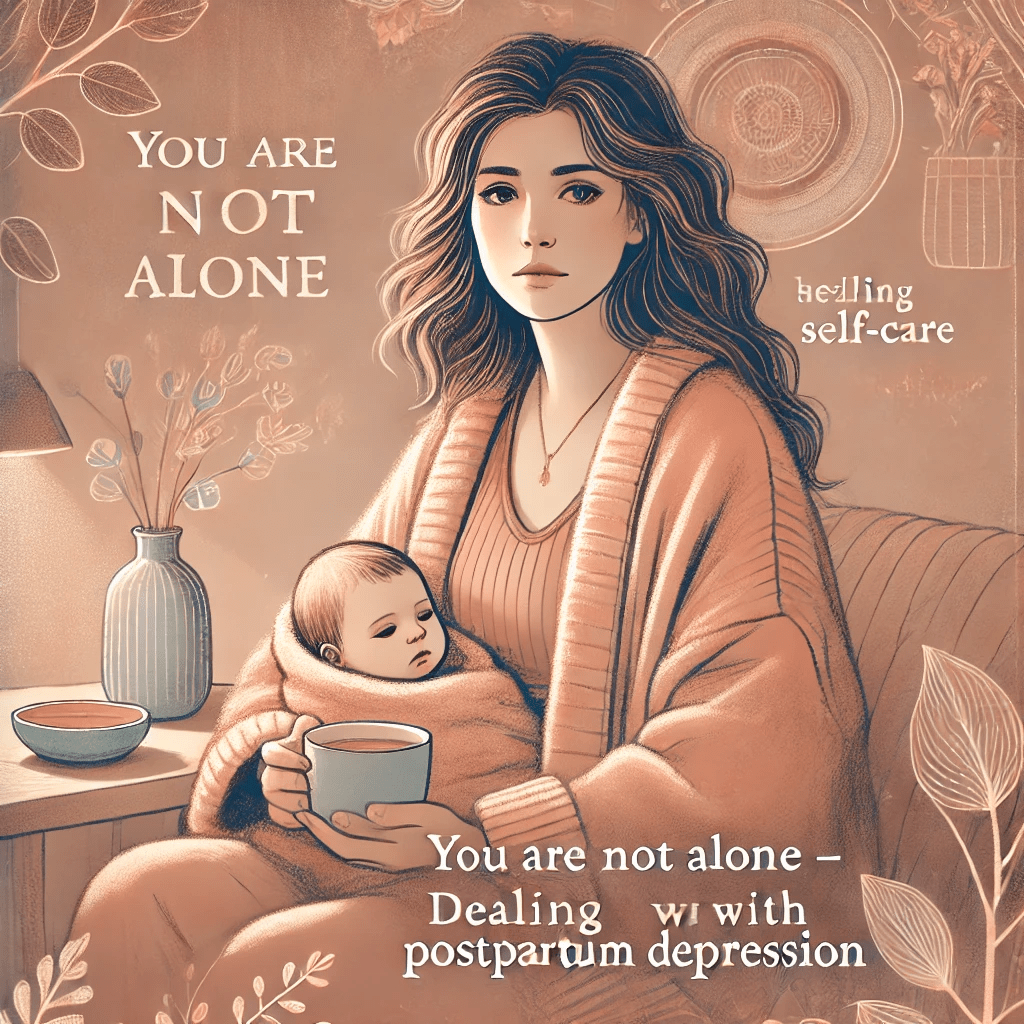
Motherhood is often painted as a picture-perfect journey—glowing smiles, cuddly newborns, and an overwhelming sense of joy.
But for many moms, the reality can feel very different.
If you’re feeling exhausted, anxious, weepy, or disconnected, you’re not alone.
Postpartum depression (PPD) is real, and it affects 1 in 7 new mothers.
If you’ve been feeling “off” after having your baby, this post is for you.
Let’s talk about what postpartum depression looks like, why it happens, and how you can navigate it with the support and care you deserve.
What is Postpartum Depression?
Postpartum depression is more than just the “baby blues.”
While many moms experience mood swings, tearfulness, and exhaustion in the first few weeks after birth, PPD lasts longer and feels deeper.
It can affect how you bond with your baby, how you see yourself, and how you function daily.
Signs You Might Have PPD
- Persistent sadness or emptiness
- Frequent crying spells (often without an obvious reason)
- Feeling disconnected from your baby or struggling to bond
- Irritability, mood swings, or anger
- Anxiety or panic attacks
- Extreme fatigue but struggling with sleep
- Loss of interest in activities you used to enjoy
- Feeling guilty or like you’re not a good mother
- Intrusive thoughts (such as thoughts of harming yourself or your baby)
If you relate to any of these, please know that you are not alone, and it’s not your fault.
Why Does Postpartum Depression Happen?
The transition to motherhood is HUGE—physically, emotionally, and mentally.
Here’s why PPD can show up:
- Hormonal Changes – After birth, estrogen and progesterone drop drastically, affecting mood regulation.
- Lack of Sleep – Sleep deprivation alone can trigger anxiety and depression.
- Overwhelm & Identity Shift – Becoming a mom changes everything—your routine, relationships, and sense of self.
- Unrealistic Expectations – Social media makes motherhood look effortless. (Spoiler: it’s NOT.)
- Past Mental Health Struggles – If you’ve had depression or anxiety before, PPD might be more likely.
How to Cope with Postpartum Depression
1. Speak Up & Seek Support
The hardest but most important step?
Tell someone.
A partner, friend, family member, or doctor—you don’t have to go through this alone.
Postpartum depression is treatable, and asking for help is a sign of strength, not weakness.
2. Prioritize Sleep (as Much as Possible!)
Lack of sleep fuels depression.
Ask your partner or a trusted family member to help with night feeds.
Even a solid 3-4 hour stretch of sleep can make a huge difference.
3. Nourish Your Body
PPD is linked to nutrient deficiencies (like iron, omega-3s, and vitamin D).
Try to eat whole, nutrient-rich foods—but also, it’s okay if some days are just coffee and toast.
4. Move Your Body (Even for 5 Minutes!)
Exercise releases endorphins (happy hormones) that fight depression.
A 5-minute walk, light yoga, or stretching can help—even if it’s just in your living room while rocking your baby.
5. Limit Social Media & Set Realistic Expectations
Comparison is the thief of joy.
Those moms with picture-perfect homes and happy babies?
They have their struggles too.
Focus on your journey, not someone else’s highlight reel.
6. Find Moments of Joy & Connection
PPD can make everything feel heavy.
Try to find small moments of light—a warm shower, a funny TV show, a cuddle with your baby, or texting a friend.
These moments add up.
7. Therapy & Medication (If Needed!)
If PPD feels overwhelming, therapy or medication can help.
A professional can provide coping strategies, and in some cases, medication can help rebalance brain chemistry.
You Are Not Alone
If you take anything from this post, let it be this:
PPD does not define you, and it does not make you a bad mother.
With time, support, and self-care, you will feel better.
If you’re struggling, please reach out for help—you deserve it.
Motherhood is hard, but you don’t have to do it alone.
🇮🇳 Support Resources for Postpartum Depression in India
If you’re experiencing postpartum depression, reaching out for help is a vital step toward recovery.
Here are some resources available in India:
1. Tele-MANAS (Government of India)
- Helpline: 14416 (24/7, free)
- Languages: English and 20+ regional languages
- Services: Connects callers with trained mental health professionals for counseling and support.
- Website: telemanas.mohfw.gov.in
2. Vandrevala Foundation
- Helpline: 1860 266 2345 or 1800 233 3330
- WhatsApp Support: Available for chat-based counseling
- Languages: English, Hindi, and regional languages
- Services: Offers free, confidential mental health support across India.
- Website: vandrevalafoundation.com
3. iCall by TISS (Tata Institute of Social Sciences)
- Helpline: +91 9152987821
- Email: icall@tiss.edu
- Services: Provides free, confidential, and professional counseling via phone and email.
- Website: icallhelpline.org
4. Mpower – The Centre
- Helpline: 1800 120 820050
- Services: Offers mental health support and counseling services.
- Website: mpowerminds.com
5. Parivarthan Counselling, Training and Research Centre
- Helpline: +91 7676602602
- Services: Provides professional counseling services.
- Website: parivarthan.org
6. The Live Love Laugh Foundation
- Helpline Directory: Provides a list of credible, verified, and free mental health helplines in India.
- Website: thelivelovelaughfoundation.org
Little note:
I’m just a mom sharing experiences and information, not a doctor or therapist.
This post is meant to offer support and guidance, but it’s not a replacement for professional medical advice.
If you’re struggling with postpartum depression or think you might be, please reach out to a qualified healthcare professional — you deserve real help and healing.
Remember, asking for help is a sign of strength, not weakness.
If You Need Immediate Help:
If you are in crisis or need someone to talk to, please reach out.
Support is just a call away — you are not alone.
- India:
- Tele-MANAS Helpline: Call 14416 (24/7, free)
- Vandrevala Foundation: Call 1860 266 2345 or 1800 233 3330
- United States:
- Postpartum Support International Helpline:
- Call/Text 1-800-944-4773
- (Text “HELP” to 800-944-4773 for English, “AYUDA” for Spanish)
- United Kingdom:
- PANDAS Foundation Helpline:
- Call 0808 1961 776 (Monday–Sunday, 11 AM–10 PM)
- Australia:
- PANDA (Perinatal Anxiety & Depression Australia)
- Helpline: Call 1300 726 306 (Monday–Saturday)
- Canada:
- Postpartum Support Canada:
- Find local resources through Postpartum Support International Canada
- Talk Suicide Canada: Call 1-833-456-4566 (24/7)
- International Support:
- Postpartum Support International (PSI): www.postpartum.net
- Offers online support groups and worldwide resources
Final Thoughts
Experiencing postpartum depression does not reflect your abilities as a mother.
With the right support and treatment, recovery is entirely possible.
If you or someone you know is struggling with PPD, don’t hesitate to reach out to the resources mentioned above.
Remember, mama — you are stronger than you feel right now, and healing is possible.
One small step at a time, you’ll find your way back to yourself.
You are seen, you are loved, and you are never, ever alone.
💛 Sending you all the good juju, mama!






Leave a comment