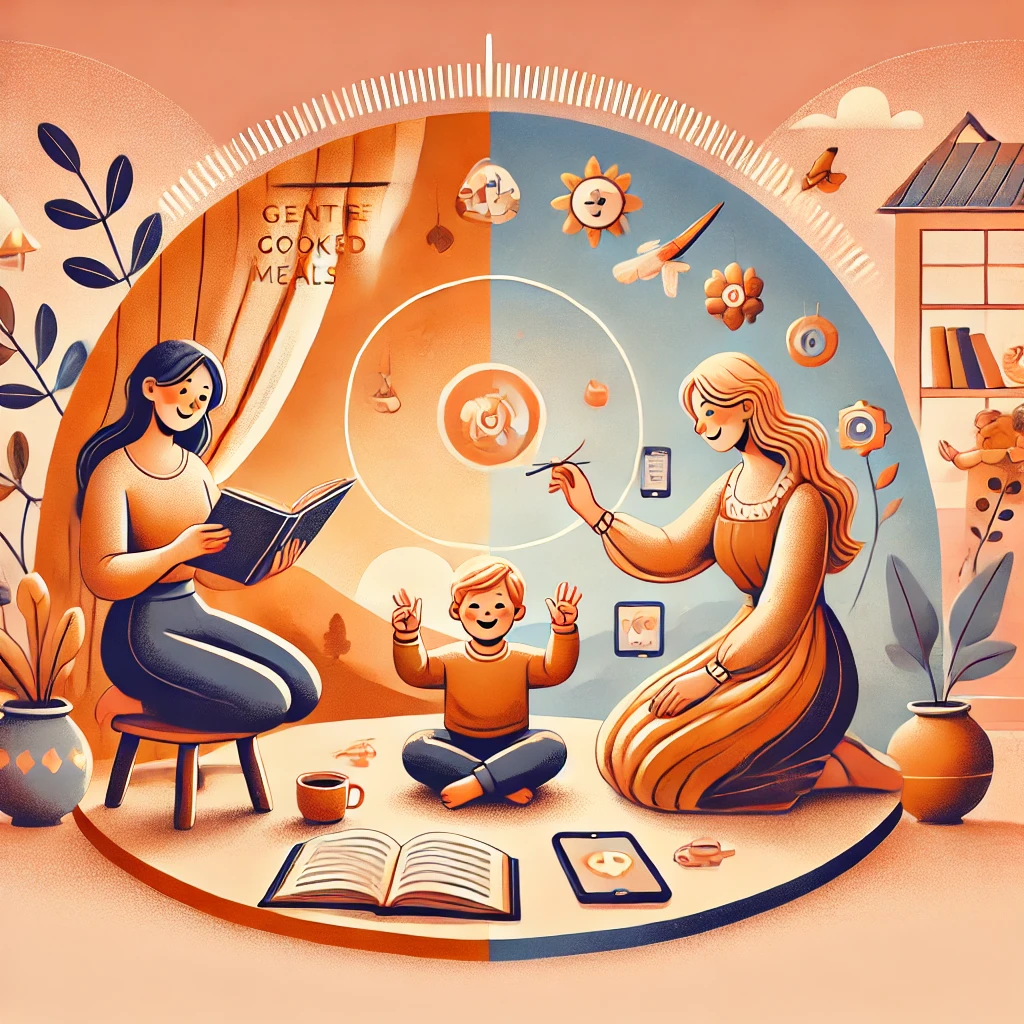
Parenting in India—where centuries-old traditions meet Peppa Pig, and where elders bless your child while simultaneously judging your diapering choices.
As a Bengali married to a Hindi-speaking husband, raising kids in our multicultural, multilingual, and somewhat “modern” household is nothing short of a social experiment.
Add living away from both sets of grandparents, and it’s a fine balance between maintaining traditions and embracing modern-day conveniences.
The Art of “Adjusting” Traditions
Indian traditions come in strong—think oil massages, kajal dot on the forehead, and feeding ceremonies that involve banana leaves and an audience.
Meanwhile, modern parenting introduces Google-researched sleep training, baby-led weaning, and a war against screen time.
So, how do we blend both without losing our sanity?
Take baby massage rituals, for example.
My grandmother swore by mustard oil massages, “It will make the bones strong!”
My pediatrician, on the other hand, recommended mild coconut oil.
The compromise?
A mix of both!
Because why argue when both sides have strong points?
Food Fights: Ghee vs. Quinoa
Indian parents believe that a child without ghee-laden parathas is a child neglected.
Meanwhile, modern parenting has us googling, “Is quinoa good for toddlers?”
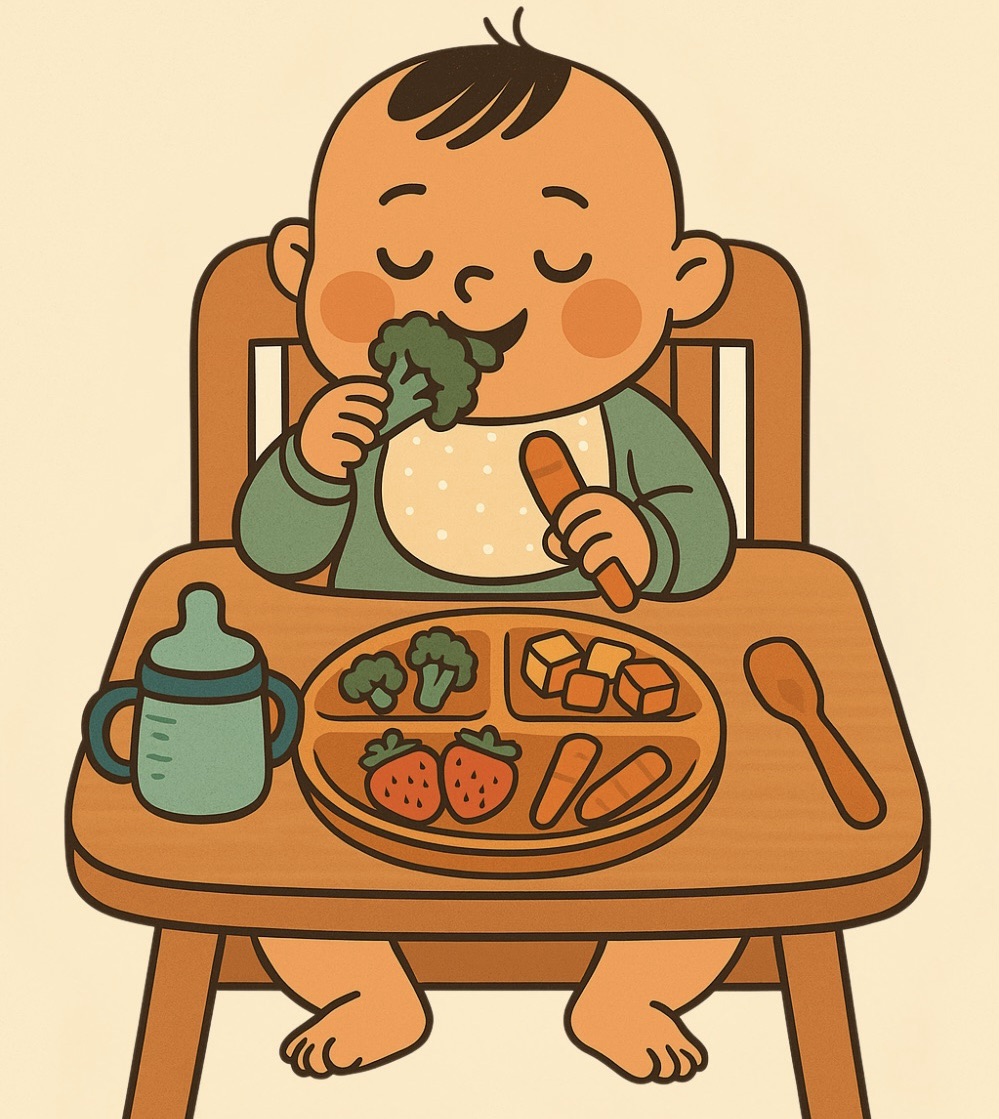
I grew up on luchi-aloor dom, my husband on aloo paratha, and here we are, trying to get our toddler to eat broccoli without protest.
The trick?
Serve the dal-chawal with a fancy name.
“This is a protein-rich lentil soup with a side of white rice!”
Sounds modern, but secretly, it’s just what my grandmother made every day.
Discipline: The Great Debate
Our parents believed in “Ek thappad” discipline.
Today, we are told to “gentle parent” and “use your words.”
I remember getting the Bengali “chokh golanor” (death stare) from my mom, which instantly fixed my behavior.
My husband still shudders at the memory of his dad’s strict tone.
Now, when our toddler throws a tantrum, we take deep breaths and say, “I see you’re frustrated. Let’s talk.”
(Meanwhile, our parents are in the background whispering, “One slap and they’ll listen.”)
Festivals and Culture: Passing the Torch Without the Overload
Durga Puja meant pandal hopping in new clothes, while Diwali for my husband was about firecrackers and diyas.
Now, we try to teach our kids both—celebrating with the same enthusiasm but slightly modernized.
Less firecrackers, more earthen diyas and LED lights.
Less “eat until you burst,” more “moderation” (but still, plenty of mishti!).
Language Lessons: Multilingual Madness
I speak Bengali, my husband speaks Hindi, we live in Tamil Nadu, and we mostly communicate in English.
Welcome to the Indian parenting language circus!
My daughter calls milk doodh, doodh is paal in Tamil, but she hears milk from cartoons.
The goal?
Raise multilingual kids without giving them an identity crisis.
So, we mix and match—Bengali lullabies, Hindi stories, English bedtime books, and a touch of Tamil from our surroundings.
The Final Balance: You Do You!
At the end of the day, parenting is part tradition, part survival, and 100% winging it.
Keep what works, let go of what doesn’t.
Whether it’s applying kajal or using a pacifier, parent your way—with love, a little chaos, and the occasional mishti bribe.
Because in the grand mix of old and new, The Good Juju is what keeps us going!









Leave a comment